Medical Disclaimer: This article is for informational purposes only and does not constitute medical advice, diagnosis, or treatment. All clinical decisions are made by licensed clinicians based on individual health evaluations. Consult a qualified healthcare provider before starting any new therapy.
NAD+ vs Glutathione: Understanding Cellular Energy and Antioxidant Support
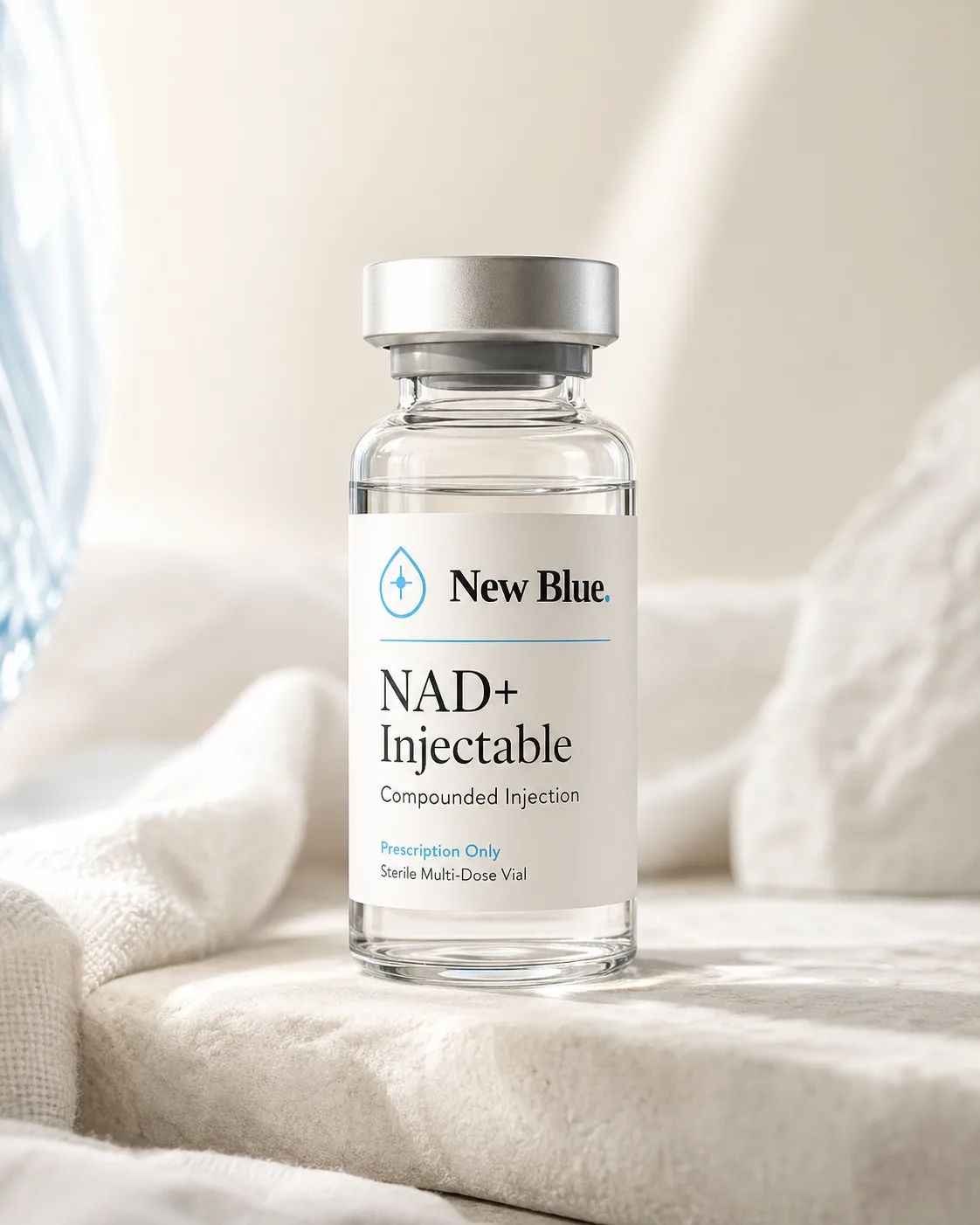
If you've spent any time researching cellular health, you've probably encountered NAD+ and glutathione mentioned in the same breath — and then immediately run into contradictory claims, vague supplement marketing, and articles that blur the line between what's established science and what's speculation. These two molecules do very different things at the cellular level, and understanding those differences matters before you talk to a clinician about either one. This article breaks down what NAD+ and glutathione actually do, how they compare, and what the research says about their respective roles — written from the perspective of a team that works within the regulated telehealth space daily.
Why Cellular Health Matters for Men 30–55
Cellular health refers to how well your cells produce energy, manage oxidative damage, and maintain the biochemical processes that keep tissues and organs functioning. For men between 30 and 55, these processes don't just hum along indefinitely — they decline measurably with age.
NAD+ levels, for instance, drop significantly over the decades. Camacho-Pereira et al. (2016) demonstrated that NAD+ decline in aging tissues is linked to mitochondrial dysfunction and increased DNA damage. Separately, glutathione — the most abundant intracellular antioxidant in the human body — also decreases with age. Lang et al. (1992) showed that plasma glutathione concentrations are lower in older adults compared to younger cohorts, with implications for oxidative stress management.
The practical result: fatigue that doesn't resolve with sleep, slower recovery from exercise, and a general sense that your body isn't bouncing back the way it used to. These aren't just feelings. They correlate with measurable biochemical shifts. That's what makes the NAD+ vs glutathione comparison relevant — not as a competition between the two, but as a framework for understanding which cellular processes might benefit from support.
What Is NAD+ and What Role Does It Play in the Body?
Nicotinamide adenine dinucleotide (NAD+) is a coenzyme found in every living cell, essential for converting nutrients into cellular energy through mitochondrial respiration. Without adequate NAD+, your mitochondria can't efficiently produce ATP — the molecule that powers virtually every cellular process.
Beyond energy metabolism, NAD+ serves as a substrate for sirtuins, a family of proteins involved in DNA repair, gene expression regulation, and cellular stress responses. Imai and Guarente (2014) published a comprehensive review in Trends in Cell Biology describing NAD+ as a critical hub connecting metabolism to aging biology. The sirtuin connection is particularly interesting because SIRT1 and SIRT3 activity depends directly on NAD+ availability — when NAD+ drops, sirtuin activity drops with it.
NAD+ also plays a role in the function of PARPs (poly ADP-ribose polymerases), enzymes that repair damaged DNA. The catch: PARP activity consumes NAD+, so chronic DNA damage — from aging, environmental exposure, or metabolic stress — can deplete NAD+ reserves faster than the body replenishes them.
For a deeper look at how NAD+ therapy has been investigated in adults, the NAD+ evidence page compiles relevant clinical literature.
What Is Glutathione and Why Is It Called the 'Master Antioxidant'?
Glutathione is a tripeptide — composed of glutamate, cysteine, and glycine — synthesized in the liver and present in virtually every cell. It earned the "master antioxidant" label because it directly neutralizes reactive oxygen species (ROS), regenerates other antioxidants like vitamins C and E, and plays a central role in Phase II liver detoxification.
The ratio of reduced glutathione (GSH) to oxidized glutathione (GSSG) is one of the most commonly used biomarkers of cellular oxidative stress. A healthy cell maintains a high GSH:GSSG ratio. When that ratio shifts — due to toxin exposure, chronic inflammation, intense exercise, or aging — cells become more vulnerable to oxidative damage.
Richie et al. (2015) conducted a randomized controlled trial showing that oral glutathione supplementation at 1,000 mg/day for six months increased body stores of glutathione and reduced markers of oxidative stress. However, oral bioavailability has been a persistent question in the literature, which is why injectable and nasal spray formulations have attracted clinical interest.
For a comparison of delivery methods, this article on glutathione formulations covers the trade-offs in detail.
NAD+ vs Glutathione: Key Differences at a Glance
These molecules serve fundamentally different biological roles. Here's a direct comparison:
| Feature | NAD+ | Glutathione |
|---|---|---|
| Primary function | Cellular energy production, DNA repair, sirtuin activation | Antioxidant defense, detoxification, immune support |
| Biological category | Coenzyme | Tripeptide antioxidant |
| Where it works | Mitochondria, nucleus | Cytoplasm, liver, every cell |
| Age-related decline | Yes — measurable drop after age 30–40 | Yes — reduced synthesis and increased oxidative demand |
| Key research focus | Metabolic function, aging biology, neuroprotection | Oxidative stress, liver health, immune modulation |
| Delivery formats studied | IV infusion, subcutaneous injection, nasal spray, oral precursors (NR, NMN) | IV infusion, subcutaneous injection, nasal spray, oral (with bioavailability concerns) |
The short version: NAD+ is about energy and repair. Glutathione is about defense and detoxification. They operate in different compartments of cell biology, which is precisely why some clinicians consider them complementary rather than interchangeable.
How NAD+ and Glutathione Relate to Men's Metabolic Health
Metabolic health isn't just about weight. It encompasses insulin sensitivity, lipid metabolism, mitochondrial efficiency, and how well your body handles the cumulative stress of daily life. Both NAD+ and glutathione intersect with these processes, but through different mechanisms.
NAD+ is directly tied to metabolic flexibility — the ability of cells to switch between fuel sources (glucose, fatty acids, ketones) depending on demand. Cantó et al. (2012) showed that boosting NAD+ levels in animal models improved mitochondrial function and metabolic outcomes, though human data is still evolving. For men dealing with sluggish energy or the metabolic slowdown that often accompanies their late 30s and 40s, NAD+ status is a relevant variable.
Glutathione, meanwhile, intersects with metabolic health through its role in managing the oxidative byproducts of metabolism itself. Every time your mitochondria produce ATP, they also generate ROS as a side effect. Glutathione mops those up. When glutathione is depleted, oxidative damage accumulates — and that damage can impair the very mitochondria that produce energy in the first place. It's a feedback loop.
This is one reason why some clinicians look at both molecules when evaluating a patient's cellular health picture rather than treating them as an either/or decision.
Can You Take NAD+ and Glutathione Together?
Some clinicians do consider both NAD+ and glutathione as part of a broader approach to cellular health support. The rationale is straightforward: if NAD+ supports energy production and repair while glutathione handles antioxidant defense, addressing both pathways simultaneously could be more comprehensive than addressing one alone.
That said, any combination of therapies needs to be evaluated by a licensed clinician who understands your individual health profile, current medications, and medical history. There is no universal protocol here. What works for one person may not be appropriate for another, and the dosing, timing, and delivery method all matter.
Published literature on combined NAD+ and glutathione protocols in humans is limited. Most of the mechanistic rationale comes from understanding their respective biochemical roles rather than from large-scale clinical trials testing the combination directly. This is an honest gap in the evidence base — not a reason to dismiss the idea, but a reason to involve a clinician rather than self-prescribing based on internet forums.
Forms and Delivery Methods: What the Research Shows
How you deliver a molecule matters as much as which molecule you choose. Both NAD+ and glutathione face bioavailability challenges with oral supplementation, which has driven interest in alternative delivery formats.
NAD+ delivery options:
- Oral precursors (NMN, NR): Widely available as supplements. Yoshino et al. (2021) published a randomized trial in Science showing that NMN supplementation improved muscle insulin sensitivity in prediabetic women, though the study was small. Oral precursors require conversion to NAD+ in the body, adding a step.
- Injectable: Subcutaneous injection delivers NAD+ more directly. This is the format used in clinician-guided protocols.
- Nasal spray: Offers a non-injection alternative with mucosal absorption. For a comparison of NAD+ nasal spray vs injection formats, that breakdown covers absorption and practical considerations.
Glutathione delivery options:
- Oral: Bioavailability has historically been questioned, though Richie et al. (2015) showed measurable increases with high-dose oral supplementation. Liposomal formulations may improve absorption.
- Injectable: Bypasses the GI tract entirely. This is the format most commonly used in clinical settings.
- Nasal spray: A newer delivery method that avoids both injection and oral absorption issues.
- IV infusion: Effective but requires clinic visits, making it less practical for ongoing use.
Through New Blue Health, NAD+ is available as an injectable or a nasal spray, and glutathione as an injectable — NAD+ injectable is $279 for the 1-month path (all-in, clinical consultation included), with a nasal spray option at $299 for the 1-month path. Glutathione injectable is $297 for the 3-month path (about $99 per month, all-in, clinical consultation included). Compounded formulations are prepared by state-licensed 503A compounding pharmacies or FDA-registered 503B outsourcing facilities.
What to Look for When Exploring Clinician-Guided Options
Not all telehealth platforms operate the same way. If you're considering NAD+ or glutathione through a remote clinician, a few things matter:
- Pharmacy sourcing: Compounded medications should come from state-licensed 503A compounding pharmacies or FDA-registered 503B outsourcing facilities. Ask directly. If a platform can't tell you where their medications are compounded, that's a problem. New Blue Health's compounding disclosure is public.
- Clinical oversight: A licensed clinician — not an algorithm, not a customer service representative — should review your health information and make prescribing decisions. Eligibility depends on that clinical review, and not everyone will be prescribed treatment.
- Regulatory certification: LegitScript certification is one third-party verification that a telehealth platform meets pharmacy and healthcare standards. New Blue Health is LegitScript-certified.
- Transparent pricing: All-in pricing means the listed price includes the clinical consultation, the medication, supplies, and shipping. If a platform quotes you a medication price and then adds consultation fees, lab fees, and shipping on top, the actual cost may be significantly higher than advertised.
For a broader framework on evaluating providers, this guide on what to ask before starting peptide therapy covers the key questions.
Common Misconceptions About NAD+ and Glutathione
"NAD+ and glutathione do the same thing." They don't. NAD+ is primarily an energy and repair molecule. Glutathione is primarily an antioxidant and detoxification molecule. They operate in different biochemical pathways.
"You can just take oral supplements and get the same effect." Oral bioavailability varies significantly between formulations. This is especially true for glutathione, where stomach acid and enzymatic breakdown can reduce how much active compound reaches your cells. Injectable and nasal spray formats exist specifically to address this limitation.
"More is always better." Dose matters, and more isn't automatically more effective. This is why clinician-guided protocols — where a licensed provider determines appropriateness and dosing — exist. Self-dosing based on anecdotal reports carries real risk.
"These are just for biohackers." NAD+ and glutathione are endogenous molecules — your body already makes them. The question isn't whether they're relevant to your biology (they are, by definition) but whether supplementation is appropriate for your specific situation. That's a clinical question, not a lifestyle branding question.
How New Blue Health Approaches This
New Blue Health is a technology and administrative services platform, not a medical provider. It connects individuals with licensed clinicians who independently evaluate whether NAD+ or glutathione therapy — or any other pathway — is appropriate based on a clinical review of the patient's health information. If a clinician determines that a therapy is not appropriate, the patient is refunded according to the published refund policy. Availability varies by state; see our state availability page. If prescribed, a licensed partner pharmacy prepares the medication and ships it directly to the patient. Andy Palenzuela founded the company after 14+ years working in regulated health product supply chains, and the platform's editorial policy governs how its educational content is written, checked and published.
Frequently Asked Questions
What is the main difference between NAD+ and glutathione?
NAD+ primarily supports cellular energy production and metabolic processes, while glutathione serves as the body's primary antioxidant, helping to neutralize oxidative stress and support detoxification. They address different but complementary aspects of cellular health.
Can NAD+ or glutathione support hormone health in men?
Some researchers are exploring potential connections between mitochondrial function, oxidative stress, and hormonal balance, but direct claims are not well established. Men interested in hormone-related goals should discuss their full health picture — including any interest in NAD+ or glutathione — with a licensed clinician.
Is it safe to take NAD+ and glutathione together?
Some clinicians may consider both as part of a broader wellness strategy, but any combination of therapies should be discussed with a licensed healthcare provider who can evaluate your individual health needs and potential interactions.
What is the regulatory status of compounded medications?
Over-the-counter NAD+ precursor supplements (like NMN or NR) and glutathione supplements are regulated as dietary supplements, not as drugs with formal regulatory approval. Compounded formulations, if prescribed by a clinician, are prepared by state-licensed 503A compounding pharmacies or FDA-registered 503B outsourcing facilities. Compounded medications are not commercially manufactured.
How can I explore NAD+ or glutathione through a telehealth platform?
Technology platforms like New Blue Health facilitate access to clinician-guided metabolic and longevity care. A licensed clinician reviews your health information and, if appropriate, may prescribe a therapy. Eligibility depends on clinical review, and if prescribed, a licensed partner pharmacy ships directly to you. Availability varies by state; see State Availability.
Bottom Line: Choosing What's Right for You
NAD+ and glutathione aren't competing options — they're different tools that address different cellular needs. NAD+ targets energy metabolism, DNA repair, and sirtuin activity. Glutathione targets oxidative defense, detoxification, and immune function. Whether one, both, or neither is appropriate for you depends on your health status, goals, and what a licensed clinician determines after reviewing your information.
The most productive thing you can do is stop treating this as a supplement shopping decision and start treating it as a clinical conversation. Bring your questions. Bring your research. And let a clinician who can see your full picture help you sort through what actually makes sense.
Medical Disclaimer: This article is for informational purposes only and does not constitute medical advice, diagnosis, or treatment. All clinical decisions are made by licensed clinicians based on individual health evaluations. Individual results vary, and eligibility for any therapy depends on clinical review. Consult a qualified healthcare provider before starting any new therapy.
Written by Andy Palenzuela — founder of New Blue Health, with 14+ years in regulated health product supply chains. Learn more about the New Blue Health Editorial Team.
Related treatment guide
Related reading
Content review & editorial standards
This page is educational content from the New Blue Health Editorial Team. It is checked under the New Blue Health Content Review Policy and Editorial Policy and should not replace individualized medical advice from a licensed clinician. For how we evaluate evidence, see Evidence Methodology and Clinical Sources & References.