Medical Disclaimer: This article is for informational purposes only and does not constitute medical advice, diagnosis, or treatment. All clinical decisions are made by licensed clinicians based on individual patient evaluation. Consult a qualified healthcare provider before starting any new supplement or treatment.
Glutathione and Your Body's Antioxidant System: An Evidence-Based Overview
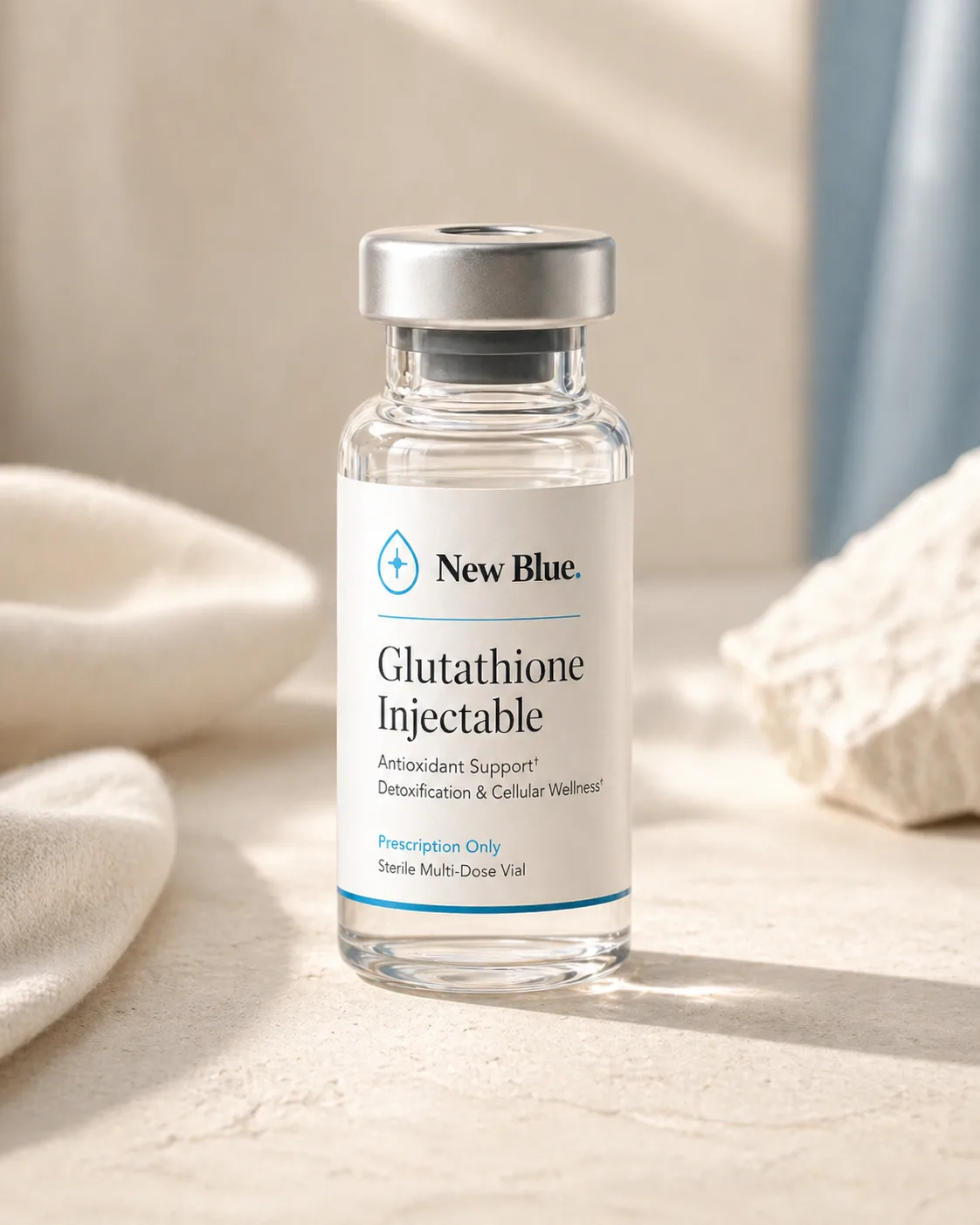
You probably landed here because you've seen glutathione called the body's "master antioxidant" and want to know what that actually means — and whether the hype holds up to scrutiny. The problem is that most online content either oversells glutathione as a universal remedy or buries the relevant science under vague language and marketing fluff. This article draws on published research, attributes claims to specific studies, and reflects the editorial standards outlined by the New Blue Health clinical content team.
Why Glutathione Matters for Men's Health
Glutathione is a tripeptide — a molecule built from three amino acids — that serves as the primary intracellular antioxidant in human cells. Its relevance to men's health specifically stems from its involvement in processes that tend to degrade with age: mitochondrial function, detoxification capacity, and the management of exercise-induced oxidative stress.
Men over 35 face a convergence of factors that put pressure on the glutathione system. Training volume may still be high, but recovery takes longer. Alcohol consumption, environmental exposures, and accumulated metabolic stress all draw down the body's glutathione reserves. And unlike some antioxidants that work only in specific compartments, glutathione operates in virtually every cell, which makes its depletion a systemic issue rather than a localized one.
This doesn't mean glutathione supplementation is automatically the answer. It means understanding the molecule — what it does, how it's regulated, and what the research actually supports — is a prerequisite for making informed decisions.
What Is Glutathione? Structure and Biological Role
Glutathione (abbreviated GSH in its reduced, active form) is a tripeptide composed of glutamate, cysteine, and glycine. It is synthesized intracellularly through a two-step enzymatic process, with the rate-limiting step catalyzed by glutamate-cysteine ligase. The availability of cysteine is typically the bottleneck in this synthesis pathway.
What makes glutathione biologically unusual is its thiol group — the sulfur-containing portion of the cysteine residue. This thiol group is what allows glutathione to donate electrons to reactive oxygen species (ROS), effectively neutralizing them before they damage lipids, proteins, and DNA. Once glutathione donates its electron, it becomes oxidized glutathione (GSSG). The enzyme glutathione reductase then recycles GSSG back to GSH using NADPH as a cofactor, creating a regenerative cycle.
Beyond direct antioxidant activity, glutathione participates in:
- Phase II detoxification: Glutathione S-transferases conjugate glutathione to xenobiotics (foreign compounds), making them water-soluble and easier to excrete.
- Immune cell regulation: Dröge and Breitkreutz (2000) published a review in Proceedings of the Nutrition Society demonstrating that glutathione levels modulate lymphocyte proliferation and natural killer cell activity.
- Regeneration of other antioxidants: Glutathione recycles oxidized vitamin C (dehydroascorbate) back to its active form, which in turn regenerates vitamin E. This is why some researchers describe it as sitting at the top of the antioxidant hierarchy.
For a more detailed look at the evidence base, New Blue Health maintains a dedicated glutathione evidence page that catalogs the primary literature.
How the Body's Antioxidant System Works
The antioxidant system is not a single mechanism but a layered defense network. Glutathione is one component — arguably the most important intracellular one — but it operates alongside enzymatic and non-enzymatic partners.
Enzymatic antioxidants include superoxide dismutase (SOD), catalase, and the glutathione peroxidase family. SOD converts superoxide radicals into hydrogen peroxide; catalase and glutathione peroxidase then convert hydrogen peroxide into water. Without glutathione peroxidase — which requires GSH as a substrate — hydrogen peroxide accumulates and can form hydroxyl radicals through the Fenton reaction. These hydroxyl radicals are among the most damaging ROS in biological systems.
Non-enzymatic antioxidants include vitamins C and E, coenzyme Q10, and glutathione itself. Each operates in different cellular compartments. Vitamin E is lipid-soluble and protects cell membranes. Vitamin C is water-soluble and works in the cytoplasm and extracellular fluid. Glutathione bridges both worlds because it regenerates both of these vitamins and also acts directly in the mitochondria, where the highest concentrations of ROS are generated.
| Antioxidant | Location | Primary Function | Glutathione Interaction |
|---|---|---|---|
| Superoxide Dismutase | Mitochondria, cytoplasm | Converts superoxide to H₂O₂ | Indirect — glutathione peroxidase handles the H₂O₂ produced |
| Catalase | Peroxisomes | Converts H₂O₂ to water | Parallel pathway to glutathione peroxidase |
| Vitamin C | Cytoplasm, extracellular | Scavenges ROS in aqueous environments | Glutathione recycles oxidized vitamin C |
| Vitamin E | Cell membranes | Protects lipids from peroxidation | Vitamin C (recycled by glutathione) regenerates vitamin E |
| Glutathione (GSH) | Nearly all cells, especially liver and mitochondria | Direct ROS neutralization, detoxification, antioxidant recycling | Central hub of the system |
The takeaway: glutathione isn't just another antioxidant in the lineup. It functions as a regenerative hub that keeps the rest of the system operational.
Glutathione and Oxidative Stress: What the Research Shows
Oxidative stress occurs when ROS production outpaces the body's ability to neutralize them. Chronic oxidative stress has been implicated in cardiovascular disease, neurodegeneration, metabolic dysfunction, and accelerated aging — though the causal relationships are still debated in the literature.
Specific to glutathione, several studies are worth noting:
- Richie et al. (2015) conducted a randomized, double-blind, placebo-controlled trial published in the European Journal of Nutrition, finding that oral glutathione supplementation at 250 mg/day and 1,000 mg/day for six months increased body stores of glutathione and reduced markers of oxidative stress. The higher dose showed more pronounced effects on lymphocyte glutathione levels.
- Sekhar et al. (2011), in a study published in The Journal of Clinical Endocrinology & Metabolism, demonstrated that older adults had significantly lower glutathione synthesis rates compared to younger adults, and that supplementation with glutathione precursors (glycine and cysteine) restored synthesis rates and lowered oxidative stress markers within two weeks.
- Forman et al. (2009) cautioned in Free Radical Biology and Medicine that the relationship between antioxidant supplementation and health outcomes is not straightforward — some ROS serve essential signaling functions, and indiscriminate suppression could theoretically interfere with adaptive responses.
This last point matters. The goal isn't to eliminate all oxidative stress. It's to maintain a functional balance — and glutathione appears to be a key regulator of that balance.
Glutathione, Metabolism, and Aging
Glutathione levels decline with age. This is not speculative; it has been measured repeatedly. The Sekhar et al. (2011) study mentioned above quantified this decline and linked it to impaired synthesis rather than increased degradation. Essentially, the enzymatic machinery slows down.
This decline correlates — though correlation is not causation — with several hallmarks of aging: increased inflammation, reduced mitochondrial efficiency, and impaired detoxification capacity. The liver, which contains the highest concentration of glutathione in the body, is particularly affected. Since the liver is the primary organ of detoxification, reduced hepatic glutathione has downstream consequences for the body's ability to process metabolic waste products and environmental toxins.
For men specifically, the intersection of declining glutathione and declining testosterone creates a compounding effect. Oxidative stress in Leydig cells (the testicular cells that produce testosterone) has been associated with reduced steroidogenesis in animal models, though human data remain limited. This is an area of active research, not established clinical fact.
For those interested in how glutathione compares to NAD+ — another molecule involved in cellular energy and aging — New Blue Health published a detailed comparison of NAD+ and glutathione that covers the overlapping and distinct roles of each.
Glutathione and Exercise Recovery
High-intensity exercise generates substantial ROS, primarily through mitochondrial electron transport chain leakage and xanthine oxidase activity. Trained athletes generally have higher baseline glutathione levels than sedentary individuals — an adaptation to chronic oxidative challenge.
However, acute bouts of intense exercise can temporarily deplete glutathione. Sastre et al. (1992), in a study published in the European Journal of Applied Physiology, found that exhaustive exercise in humans reduced blood GSH levels by approximately 40%, with recovery taking several hours.
This temporary depletion is part of the adaptive signaling that drives training adaptations. This is why the timing and context of antioxidant supplementation matters — and why blanket recommendations to "take more antioxidants" miss the nuance. Some researchers, including Ristow et al. (2009) in Proceedings of the National Academy of Sciences, have argued that antioxidant supplementation during training may actually blunt beneficial adaptations like improved insulin sensitivity.
The practical implication: glutathione support may be more relevant for recovery between training blocks or during periods of high cumulative stress than as a daily pre-workout supplement. But individual responses vary, and this is exactly the kind of decision that should involve a licensed clinician.
Dietary and Lifestyle Factors That Support Glutathione Levels
Before considering supplementation, it's worth understanding what supports endogenous glutathione production:
- Sulfur-containing foods: Garlic, onions, cruciferous vegetables (broccoli, Brussels sprouts, kale) provide sulfur-containing compounds that support cysteine availability.
- Whey protein: Contains cysteine-rich proteins that serve as glutathione precursors. Bounous and Gold (1991) published data in Clinical and Investigative Medicine showing whey protein supplementation increased lymphocyte GSH levels.
- Sleep: Glutathione synthesis follows circadian patterns. Chronic sleep deprivation has been associated with reduced glutathione levels in animal models.
- Moderate exercise: As noted above, regular training upregulates the glutathione system over time.
- Alcohol moderation: Ethanol metabolism generates acetaldehyde, which depletes hepatic glutathione. Heavy drinking is one of the fastest ways to drain the body's reserves.
Forms of Glutathione Supplementation: What the Evidence Says
Not all supplementation routes are equivalent. The bioavailability debate is real and ongoing.
| Delivery Method | Bioavailability Evidence | Practical Considerations |
|---|---|---|
| Oral (standard) | Mixed — earlier studies suggested poor absorption; Richie et al. (2015) showed measurable increases at higher doses | Convenient but requires higher doses; results vary by formulation |
| Liposomal oral | Sinha et al. (2018) in European Journal of Clinical Nutrition found liposomal glutathione raised GSH levels more effectively than standard oral | More expensive; limited long-term data |
| Injectable | Bypasses GI tract entirely; direct systemic availability | Requires prescription; administered subcutaneously |
| Nasal spray | Emerging delivery method; limited published data on glutathione specifically | Non-invasive alternative to injection |
| IV infusion | High bioavailability in acute settings | Requires clinical visit; not practical for ongoing use |
New Blue Health offers both glutathione injectable and nasal spray options, with the injectable starting at $249 for a 30-day supply and the nasal spray at $299 for a 28-day supply — all-in pricing that includes the clinical consultation. A deeper comparison of delivery methods is available in their glutathione delivery method comparison article.
All glutathione products available through New Blue Health are compounded at state-licensed 503A pharmacies. Compounded medications are prepared to order, not commercially manufactured. New Blue Health is a LegitScript-certified technology and administrative services platform, not a medical provider — all prescribing decisions are made by licensed clinicians based on individual clinical review.
Common Misconceptions About Glutathione
"Glutathione is a detox miracle." Glutathione does participate in Phase II liver detoxification. But calling it a "detox miracle" overstates the evidence and ignores the fact that the body's detoxification systems involve dozens of enzymes and pathways working in concert.
"You can just take NAC instead." N-acetylcysteine (NAC) is a glutathione precursor, and it does support GSH synthesis. But NAC and glutathione are not interchangeable — they have different pharmacokinetics and different clinical evidence bases. NAC is well-studied for acetaminophen toxicity and certain respiratory conditions; direct glutathione supplementation addresses the molecule itself.
"More is always better." The Forman et al. (2009) caution about ROS signaling applies here. Supraphysiological glutathione levels have not been shown to produce proportionally better outcomes. The goal is restoring adequate levels, not flooding the system.
How New Blue Health Approaches Glutathione
New Blue Health offers glutathione through both injectable and nasal spray pathways, with all orders following the same process: complete an intake, have a licensed clinician review your information, and — if appropriate — receive your prescription medication shipped directly from a state-licensed 503A pharmacy. The platform is available in 48 states (Alabama and Mississippi excluded). Pricing is all-in, meaning the clinical consultation is included in the listed price. For context, founder Andy Palenzuela built the platform after 14+ years working in regulated health product supply chains, with a focus on transparency around sourcing and compounding standards — details available on the about page.
Key Takeaways and Next Steps
Glutathione is not a marketing buzzword. It is a well-characterized molecule with decades of published research supporting its role as the body's primary intracellular antioxidant. Its involvement in detoxification, immune function, antioxidant recycling, and mitochondrial protection is documented — though the clinical implications of supplementation are still being refined.
If you're considering glutathione supplementation, the most important step is an honest conversation with a licensed clinician who can evaluate your individual situation. No article — this one included — can substitute for that.
Frequently Asked Questions
What does glutathione do in the body?
Glutathione is a naturally occurring antioxidant found in nearly every cell. It supports the body's defense against oxidative stress by neutralizing reactive oxygen species and helping regenerate other antioxidants like vitamins C and E. Research suggests glutathione also plays a role in detoxification and immune function.
Do glutathione levels decline with age?
Published research, including the Sekhar et al. (2011) study in The Journal of Clinical Endocrinology & Metabolism, indicates that glutathione levels may decrease as people age, which some studies associate with increased oxidative stress. However, the clinical significance of this decline and the best strategies to address it are still areas of active research. Individuals should discuss concerns about age-related changes with a licensed clinician.
Can you increase glutathione through diet?
Certain foods provide precursors that support glutathione production, including sulfur-rich foods like garlic, onions, and cruciferous vegetables, as well as protein sources containing cysteine such as whey protein. While dietary strategies may support the body's natural glutathione synthesis, individual responses vary and specific dietary plans should be discussed with a healthcare provider.
Is oral glutathione supplementation effective?
The bioavailability of oral glutathione has been debated in the scientific literature. Richie et al. (2015) found that oral supplementation at 250–1,000 mg/day for six months raised blood glutathione levels, and Sinha et al. (2018) showed liposomal formulations may be more effective than standard oral forms. Anyone considering glutathione supplementation should consult a licensed clinician to discuss the evidence and determine what may be appropriate for their situation.
Is glutathione safe?
Glutathione is naturally produced by the body and is generally considered well-tolerated. However, supplemental forms — whether oral, liposomal, or injectable — may carry different safety profiles and potential interactions. Side effects and safety should always be discussed with a licensed healthcare provider before starting any new supplement or treatment.
What is the regulatory status of compounded medications?
Compounded medications, including compounded glutathione, are prepared to order at state-licensed 503A pharmacies. They are not commercially manufactured pharmaceutical products. New Blue Health is a LegitScript-certified platform that connects patients with licensed clinicians who determine whether a compounded medication is appropriate based on individual clinical review. For more on compounding standards, see the compounding disclosure.
Medical Disclaimer: This article is for informational purposes only and does not constitute medical advice, diagnosis, or treatment. All clinical decisions are made by licensed clinicians based on individual patient evaluation. Consult a qualified healthcare provider before starting any new supplement or treatment. Individual results vary, and eligibility for any treatment depends on clinical review.
Written by Andy Palenzuela — founder of New Blue Health, with 14+ years in regulated health product supply chains. Learn more about our clinical content team and editorial policy.
<!--SCHEMA_JSONLD [ { "@context": "https://schema.org", "@type": "Article", "headline": "Glutathione and Your Body's Antioxidant System: An Evidence-Based Overview", "description": "Learn how glutathione supports the body's antioxidant defense system. This evidence-based overview covers what the research says about glutathione's role in oxidative stress, metabolism, and overall health.", "author": { "@type": "Person", "name": "Andy Palenzuela" }, "publisher": { "@type": "Organization", "name": "New Blue Health", "url": "https://newbluehealth.com" }, "datePublished": "2025-07-09", "dateModified": "2025-07-09", "mainEntityOfPage": { "@type": "WebPage", "@id": "[Glutathione Antioxidant System Evidence Based Overview](/blog/glutathione-antioxidant-system-evidence-based-overview)" } }, { "@context": "https://schema.org", "@type": "FAQPage", "mainEntity": [ { "@type": "Question", "name": "What does glutathione do in the body?", "acceptedAnswer": { "@type": "Answer", "text": "Glutathione is a naturally occurring antioxidant found in nearly every cell. It supports the body's defense against oxidative stress by neutralizing reactive oxygen species and helping regenerate other antioxidants like vitamins C and E. Research suggests glutathione also plays a role in detoxification and immune function." } }, { "@type": "Question", "name": "Do glutathione levels decline with age?", "acceptedAnswer": { "@type": "Answer", "text": "Published research indicates that glutathione levels may decrease as people age, which some studies associate with increased oxidative stress. However, the clinical significance of this decline and the best strategies to address it are still areas of active research. Individuals should discuss concerns about age-related changes with a licensed clinician." } }, { "@type": "Question", "name": "Can you increase glutathione through diet?", "acceptedAnswer": { "@type": "Answer", "text": "Certain foods provide precursors that support glutathione production, including sulfur-rich foods like garlic, onions, and cruciferous vegetables, as well as protein sources containing cysteine such as whey protein. While dietary strategies may support the body's natural glutathione synthesis, individual responses vary and specific dietary plans should be discussed with a healthcare provider." } }, { "@type": "Question", "name": "Is oral glutathione supplementation effective?", "acceptedAnswer": { "@type": "Answer", "text": "The bioavailability of oral glutathione has been debated in the scientific literature. Some newer studies suggest that certain oral formulations may raise blood glutathione levels, but results vary across studies and formulations. Anyone considering glutathione supplementation should consult a licensed clinician to discuss the evidence and determine what may be appropriate for their situation." } }, { "@type": "Question", "name": "Is glutathione safe?", "acceptedAnswer": { "@type": "Answer", "text": "Glutathione is naturally produced by the body and is generally considered well-tolerated. However, supplemental forms — whether oral, liposomal, or injectable — may carry different safety profiles and potential interactions. Side effects and safety should always be discussed with a licensed healthcare provider before starting any new supplement or treatment." } }, { "@type": "Question", "name": "What is the regulatory status of compounded medications?", "acceptedAnswer": { "@type": "Answer", "text": "Compounded medications, including compounded glutathione, are prepared to order at state-licensed 503A pharmacies. They are not commercially manufactured pharmaceutical products. New Blue Health is a LegitScript-certified platform that connects patients with licensed clinicians who determine whether a compounded medication is appropriate based on individual clinical review." } } ] }, { "@context": "https://schema.org", "@type": "MedicalWebPage", "about": { "@type": "MedicalCondition", "name": "Oxidative Stress" }, "headline": "Glutathione and Your Body's Antioxidant System: An Evidence-Based Overview", "lastReviewed": "2025-07-09", "mainContentOfPage": { "@type": "WebPageElement", "cssSelector": "article" } } ] -->Related treatment guide
Related reading
Medical review & editorial standards
This page is educational content from the New Blue Health Clinical Content Team. It is reviewed under the New Blue Health Medical Review Policy and Editorial Policy and should not replace individualized medical advice from a licensed clinician. For how we evaluate evidence, see Evidence Methodology and Clinical Sources & References.