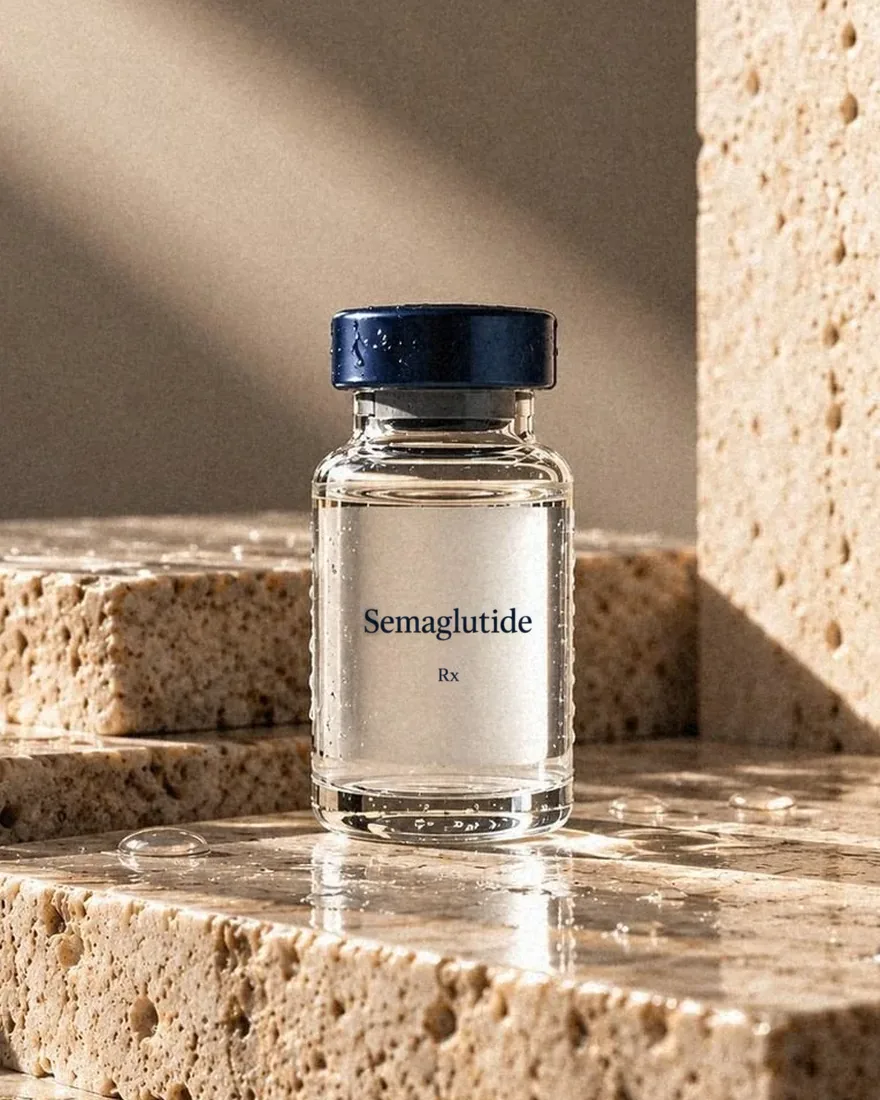
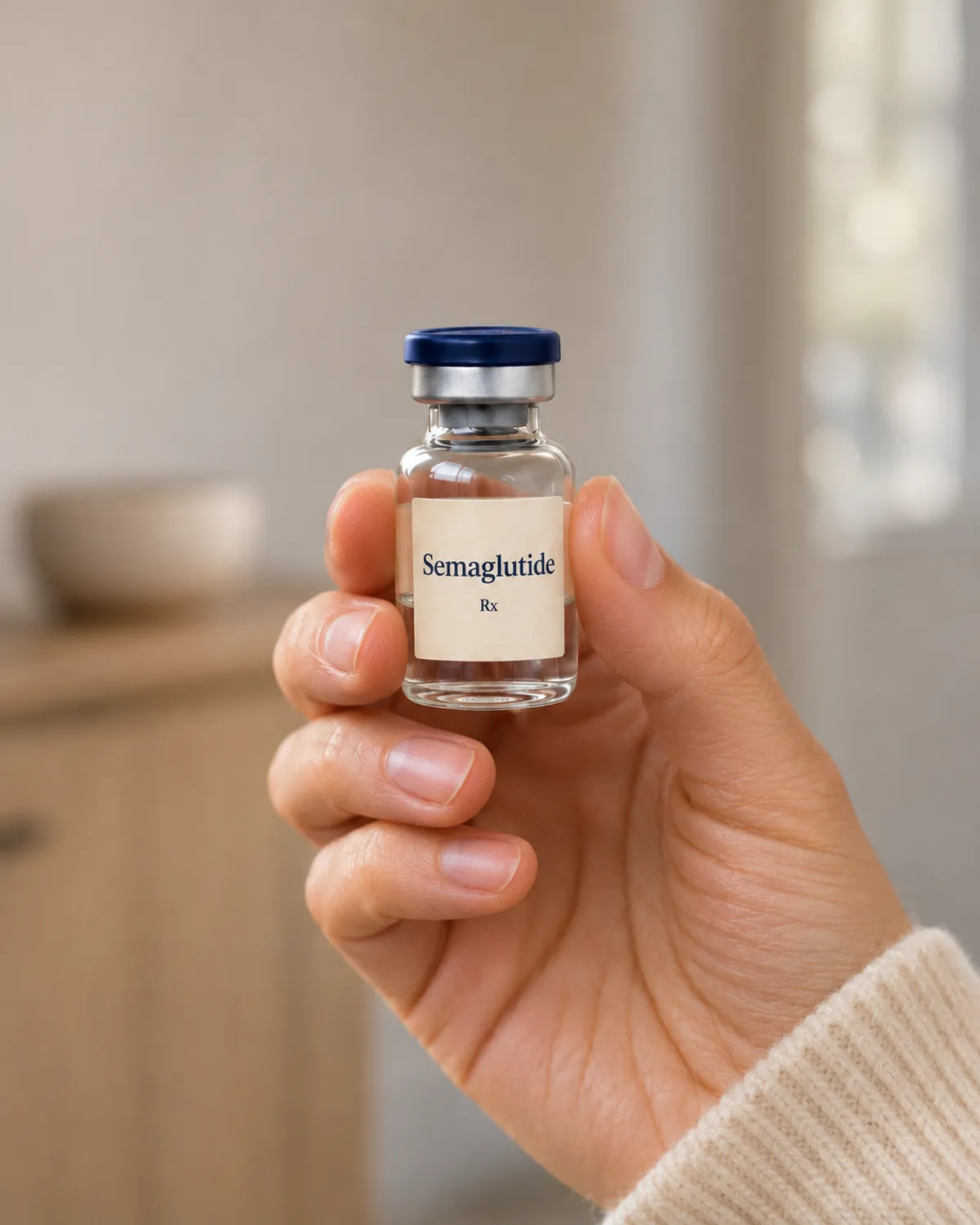
Start your visitIf prescribed. Vials and bottles may look different depending on the pharmacy.
Semaglutide
GLP-1 agonist Injection
A compounded GLP-1 medication, given by injection under the skin.
Adults 21+ seeking clinician-guided weight-management support may want to discuss it. Available only if prescribed by an independent licensed clinician, after a short online visit.
Starts with a secure online intake about your health history and goals.
Both plans include the $75 clinician review, medication if prescribed, injection supplies and shipping to your door.
No charge until your request is accepted for clinician review.
Not prescribed? You get 100% back: all $567. The only exception is where state rules require a video visit (Arkansas, Kansas, New Jersey, New Mexico, Rhode Island, Virginia and West Virginia). There, $75 pays for that visit and the other $492 is refunded.
GLP-1 medications aren’t right for everyone, including people with a personal or family history of medullary thyroid carcinoma or MEN 2, or a history of pancreatitis. Adults 21 and over. This option can’t ship to every state we serve. Only when clinically appropriate.Never guaranteed. Compounded medications are not FDA-approved. Check availability in your state
How it works
How a semaglutide request works
1
Complete a secure online intake about your health history and goals.
Today, online. Includes a photo ID.
2
An independent licensed clinician reviews your intake to see whether semaglutide is appropriate for you.
Typically reviewed in 12 to 36 hours. A few states require a video visit instead. You’ll see that before you pay.
3
If prescribed, your medication ships from a licensed partner pharmacy.
Typically 2 to 3 days at the pharmacy, then 1 to 2 days in transit.
Typical times, not promises. Only when clinically appropriate. Never guaranteed.
Prescriptions are filled by licensed U.S. pharmacies. Compounded medications are prepared by state-licensed 503A compounding pharmacies or FDA-registered 503B outsourcing facilities. Compounded medications are not FDA-approved.
Packaging may look different depending on the pharmacy.
Delivered to your door, if prescribed.
What you pay
$567, one payment for 3 months.
Your card
Held today, not charged. The hold becomes a charge when your request is accepted for clinician review.
Not prescribed?
You get 100% back: all $567. The only exception is where state rules require a video visit (Arkansas, Kansas, New Jersey, New Mexico, Rhode Island, Virginia and West Virginia). There, $75 pays for that visit and the other $492 is refunded. Refund policy
After that
Nothing renews automatically, and there’s no membership. Continuing requires a follow‑up intake.
New Blue Health is a technology and administrative services platform: it runs the website, your account, payments and support. An independent licensed clinician reviews your request. Only a clinician can prescribe. A licensed partner pharmacy prepares your medication, if prescribed.
Privacy
No advertising pixels and no third-party analytics. We don’t sell your personal or health information.
Vials and bottles may look different depending on the pharmacy.
Good to know
What arrives, if prescribed.
Injectable
Given by injection under the skin, as prescribed after clinician review.
Pharmacy
A licensed partner pharmacy fills your prescription, if prescribed.
Ships cold
Temperature-controlled. Your medication, injection supplies and the pharmacy’s instructions arrive together.
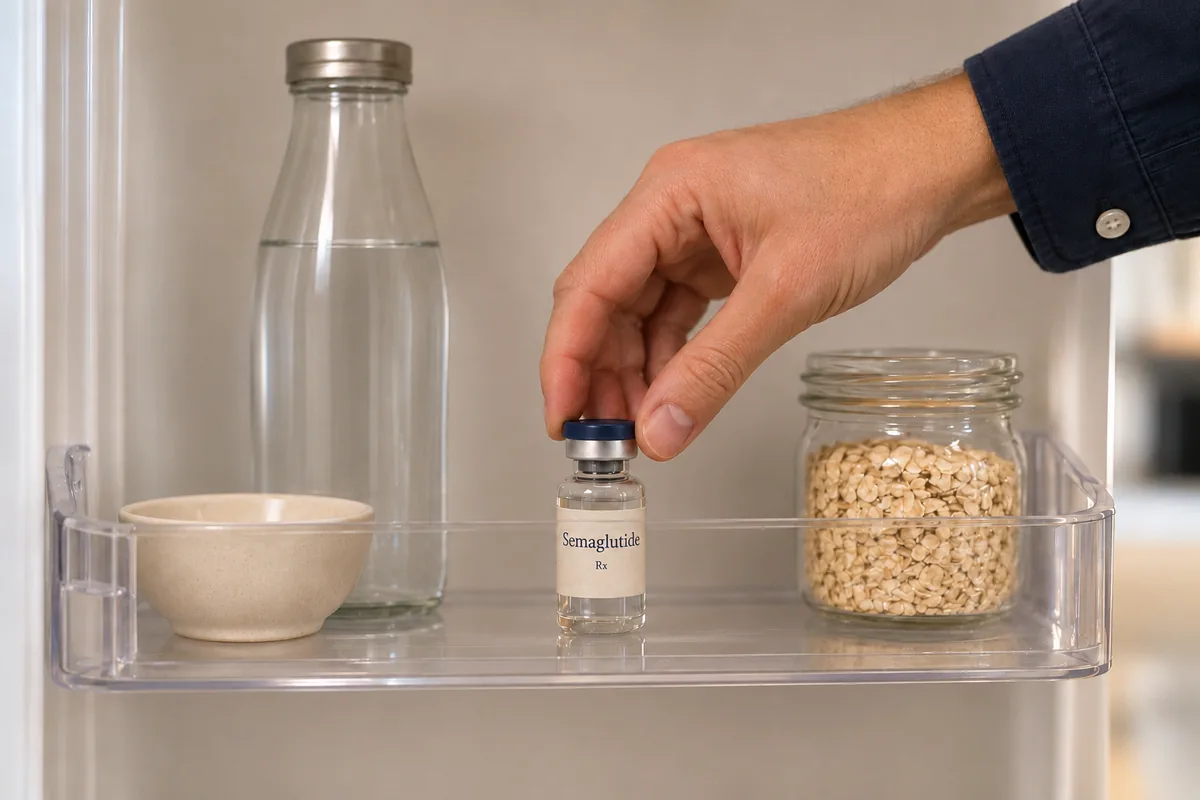
Your fridge
Refrigerate as labeled.
After your plan
Continuing requires a follow‑up intake.
Vials and bottles may look different depending on the pharmacy.
Only when clinically appropriate. Never guaranteed.
Frequently asked questions
Write to support@newbluehealth.com. The New Blue team answers Monday to Friday, 9 a.m. to 6 p.m. Eastern, within one business day. Medical questions are passed to your clinician.
Not for emergencies: in a medical emergency, call 911.
What is compounded semaglutide?
Compounded semaglutide is semaglutide prepared by a licensed compounding pharmacy rather than manufactured as a branded product. Compounded drugs are not FDA-approved and are not reviewed by the FDA for safety, effectiveness or quality. Through New Blue, a technology and administrative services platform, it is available only if prescribed by an independent licensed clinician. Prescriptions are filled by licensed U.S. pharmacies. Compounded medications are prepared by state-licensed 503A compounding pharmacies or FDA-registered 503B outsourcing facilities.
Is compounded semaglutide safe?
Compounded semaglutide is not FDA-approved, so the FDA has not reviewed it for safety, effectiveness or quality. Like any prescription medication, it carries risks and side effects that should be discussed with an independent licensed clinician, who decides whether it is appropriate. Prescriptions are filled by licensed U.S. pharmacies. Compounded medications are prepared by state-licensed 503A compounding pharmacies or FDA-registered 503B outsourcing facilities.
Who may want to discuss semaglutide with a clinician?
Adults 21+ who are physically located in a covered state and want clinician-guided weight-management support may want to discuss semaglutide. Fit depends on medical history, current medications, contraindications, side-effect tolerance, and treatment goals.
What makes this different from branded semaglutide products?
Compounded semaglutide discussed through New Blue is prepared by state-licensed 503A compounding pharmacies or FDA-registered 503B outsourcing facilities if prescribed. Compounded drugs are not FDA-approved and are not reviewed by FDA for safety, effectiveness, or quality.
Do I need lab work?
Not always. Your clinician may or may not request labs based on your history, symptoms, and risk profile.
Can I use semaglutide with other medications?
Your prescribing clinician should review your full medication list before treatment begins, especially if you use diabetes medications or other weight-management therapies.
What should I review with my clinician before starting semaglutide?
Review prior GLP-1 use, history of pancreatitis or gallbladder symptoms, personal or family history of medullary thyroid carcinoma or MEN 2, pregnancy plans, current medications, and your ability to follow a weekly titration schedule. Your clinician should also discuss follow-up timing and what symptoms should trigger a hold, call, or escalation.
How quickly will I see results?
Response varies by person, dose-titration pace, baseline habits, and the overall care plan. Your clinician can review what to track, when to reassess progress, and when slower progress needs a different discussion.
When should I contact my clinician or seek urgent care?
Severe or worsening symptoms, signs of allergic reaction, chest pain, trouble breathing, neurologic symptoms, or inability to keep fluids down should prompt urgent evaluation. Telehealth is not emergency care. Call 911 or go to the nearest emergency department for life-threatening symptoms.
Are results guaranteed?
No. Eligibility, tolerability, and outcomes vary by person. Prescriptions are never automatic or guaranteed, and treatment decisions are made by a licensed clinician based on your history, current medications, contraindications, and goals.
How much does Semaglutide cost?
Semaglutide is $189/mo, $567 for 3 months, or $279 for 1 month. Both plans include the $75 clinician review, medication if prescribed, injection supplies and shipping to your door. Available only if prescribed by an independent licensed clinician.
Compounded semaglutide, 3 months: $567 total ($189/mo), one payment. Nothing renews automatically. Not prescribed? You get 100% back: all $567. The only exception is where state rules require a video visit (Arkansas, Kansas, New Jersey, New Mexico, Rhode Island, Virginia and West Virginia). There, $75 pays for that visit and the other $492 is refunded. Only when clinically appropriate. Never guaranteed.
Semaglutide is a GLP-1 receptor agonist used in FDA-approved products for chronic weight management and diabetes indications. New Blue discusses clinician-supervised compounded semaglutide pathways, but compounded drugs are not FDA-approved and are not reviewed by FDA for safety, effectiveness, or quality.
Pregnancy plans, pancreatitis history, gallbladder symptoms, medullary thyroid carcinoma history, and MEN 2 risk should be discussed before treatment begins.
If the better comparison question is dual-pathway fit rather than dose adjustment, review tirzepatide before switching.