Medical Disclaimer: This article is for informational purposes only and does not constitute medical advice, diagnosis, or treatment. All clinical decisions should be made by a licensed clinician based on individual health evaluation. Consult a qualified healthcare professional before starting any new supplementation or treatment.
Glutathione for Skin and Overall Wellness — What the Evidence Actually Says
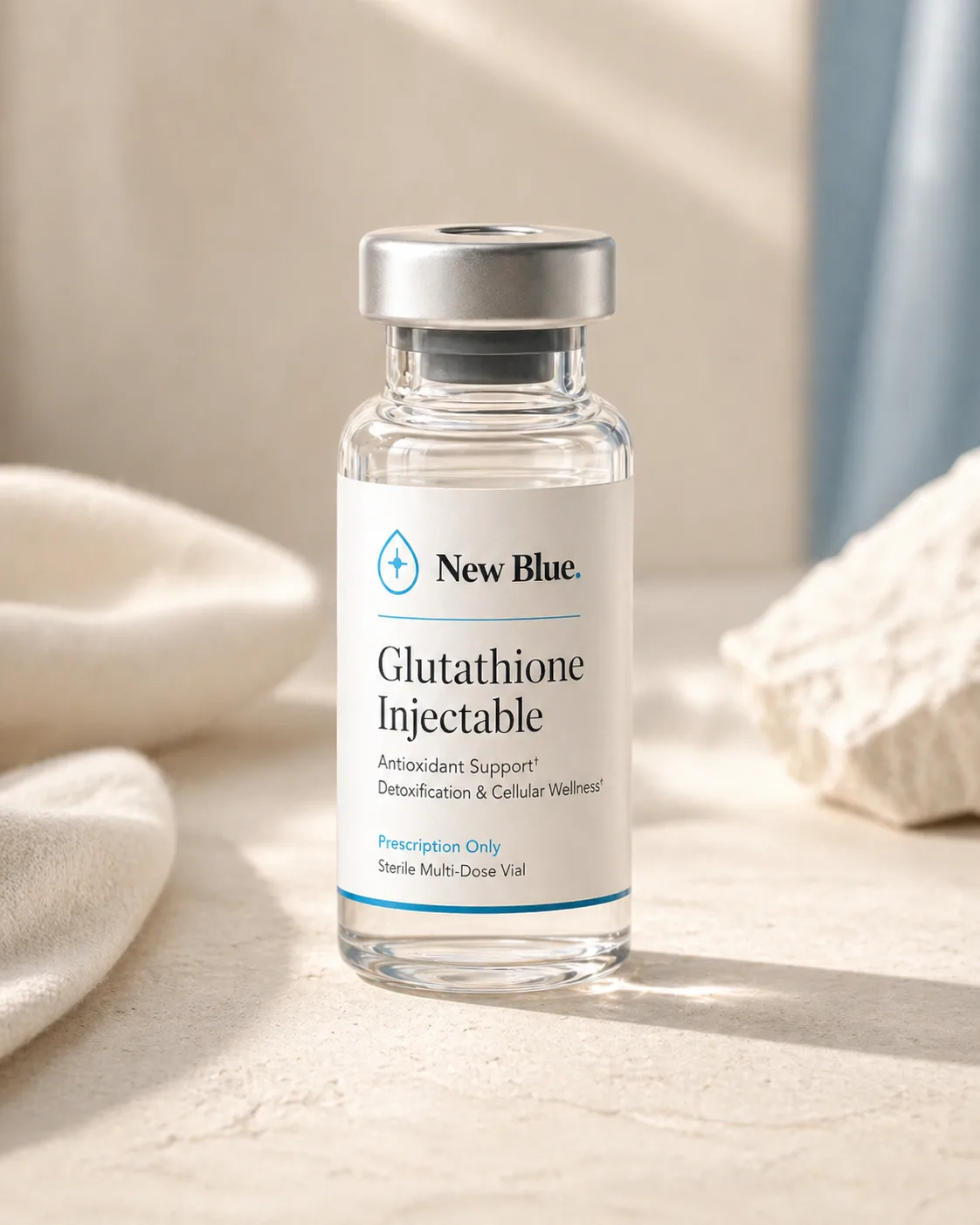
If you've searched for glutathione benefits for skin and wellness, you've probably encountered a wall of contradictory information — some sources calling it a miracle molecule, others dismissing it entirely. The truth, as usual, sits somewhere in the middle, buried under layers of marketing copy and poorly cited claims. This article pulls from published research, explains what glutathione actually does in the body, and offers context for men in their 30s through 50s who are evaluating whether it belongs in their health strategy.
What Is Glutathione and Why Does Your Body Make It?
Glutathione is a tripeptide — a molecule made of three amino acids (glutamate, cysteine, and glycine) — produced in virtually every cell of the human body. It functions as the body's primary endogenous antioxidant, meaning your cells manufacture it internally rather than relying solely on dietary intake.
Its roles are broad. Glutathione neutralizes reactive oxygen species (free radicals), supports phase II liver detoxification by conjugating toxins for excretion, and helps maintain the reduced (active) forms of other antioxidants like vitamins C and E. It also plays a part in DNA synthesis, protein synthesis, and immune cell function — particularly in lymphocyte proliferation.
Here's what makes glutathione distinct from the antioxidants you get from blueberries or green tea: it works intracellularly. While dietary antioxidants operate largely in the bloodstream and extracellular fluid, glutathione does its work inside the cell, protecting mitochondria and nuclear DNA directly. This is why researchers sometimes refer to it as the "master antioxidant," though that phrase has been co-opted by so many supplement brands that it's lost some of its scientific precision.
Glutathione levels decline with age. Julius et al. (1994) documented lower glutathione concentrations in older adults, and subsequent work by Lang et al. (2000) connected depleted glutathione status with increased susceptibility to oxidative damage. For men over 35, this age-related decline intersects with other metabolic shifts — declining testosterone, increased visceral fat accumulation, reduced mitochondrial efficiency — creating a compounding effect that researchers are still working to fully characterize.
Glutathione and Skin Health — What the Studies Show
Glutathione affects skin through two primary mechanisms: antioxidant protection against UV-induced oxidative damage, and modulation of melanin synthesis. The melanin pathway is what drives most of the "skin brightening" claims you'll see online.
The most frequently cited human trial is Weschawalit et al. (2017), a randomized, double-blind, placebo-controlled study published in Clinical, Cosmetic and Investigational Dermatology. Participants who took oral glutathione (either reduced or oxidized forms) for 12 weeks showed measurable improvements in skin elasticity and reductions in melanin index at several body sites compared to placebo. The effect sizes were modest but statistically significant.
An earlier study by Arjinpathana and Asawanonda (2012) found that 500 mg of oral glutathione daily for four weeks produced measurable skin lightening effects in a small cohort. The sample size was limited — 60 participants — and the study duration was short, which makes it difficult to draw sweeping conclusions.
What the research supports, cautiously:
- Glutathione may reduce melanin production by shifting the melanogenesis pathway from eumelanin (darker pigment) toward pheomelanin (lighter pigment)
- Antioxidant activity may protect against photoaging — the cumulative skin damage from UV exposure
- Improvements in skin elasticity have been observed in controlled settings
What the research does not support: calling glutathione a reliable skin-lightening treatment or promising specific cosmetic outcomes. Study sizes remain small, follow-up periods are short, and individual variation is substantial.
For a deeper look at the evidence base, New Blue Health maintains a dedicated glutathione evidence page with study summaries and methodology notes.
Glutathione and Overall Wellness — Immune Function, Detoxification, and Aging
Beyond skin, glutathione's roles in immune regulation and detoxification are better established in the literature — though still evolving.
Immune function. Dröge and Breitkreutz (2000) published a comprehensive review in Proceedings of the Nutrition Society demonstrating that glutathione is essential for lymphocyte activation and proliferation. T-cells, natural killer cells, and other immune effectors require adequate intracellular glutathione to function properly. This is not a fringe finding — it's been replicated across multiple research groups and is well-accepted in immunology.
Detoxification. The liver uses glutathione extensively in phase II conjugation reactions. When you metabolize alcohol, pharmaceutical drugs, environmental pollutants, or endogenous waste products, glutathione binds to these compounds and makes them water-soluble for excretion. Chronic exposure to toxins — or simply the metabolic load of modern life — can deplete glutathione stores faster than the body replenishes them.
Aging and mitochondrial health. Sekhar et al. (2011) at Baylor College of Medicine found that supplementing older adults with glycine and N-acetylcysteine (glutathione precursors) restored glutathione synthesis rates and improved markers of oxidative stress, mitochondrial function, and insulin resistance. This study is particularly relevant for men in their 40s and 50s who are noticing changes in energy, recovery, and metabolic resilience.
The relationship between glutathione and NAD+ is worth noting here. Both molecules decline with age, both are involved in mitochondrial function, and some clinicians explore them in combination. They operate through different mechanisms — NAD+ primarily supports cellular energy production and sirtuin activation, while glutathione handles oxidative defense — but the overlap in downstream effects (energy, recovery, cellular repair) is why they're sometimes paired in longevity-focused protocols.
Delivery Methods Compared — Oral, IV, Liposomal, and Topical
Not all glutathione delivery methods are equal, and bioavailability is the central issue.
| Delivery Method | Bioavailability | Practical Considerations |
|---|---|---|
| Oral (standard capsules) | Low — significant first-pass metabolism in the gut and liver | Convenient but much of the glutathione is broken down before reaching systemic circulation |
| Liposomal oral | Moderate — lipid encapsulation may improve absorption | Better than standard oral; Sinha et al. (2018) showed liposomal glutathione raised blood GSH levels more effectively than unformulated oral |
| IV infusion | High — bypasses GI tract entirely | Requires clinic visits; expensive per session; not practical for ongoing use |
| Injectable (subcutaneous) | High — direct systemic delivery | Can be self-administered at home with proper guidance; avoids first-pass metabolism |
| Nasal spray | Moderate to high — mucosal absorption bypasses GI degradation | Non-invasive alternative to injection; absorption rates vary by formulation |
The bioavailability problem with oral glutathione was documented by Witschi et al. (1992), who found that a single oral dose of 3,000 mg did not significantly raise plasma glutathione levels in healthy volunteers. This finding drove interest in alternative delivery routes.
For a more detailed comparison of delivery formats, New Blue Health has published a side-by-side analysis of glutathione injections, nasal spray, and IV delivery.
Common Marketing Claims vs. What the Evidence Supports
This is where things get messy online. Here's a straightforward breakdown:
| Marketing Claim | What the Evidence Actually Shows |
|---|---|
| "Detoxifies your entire body" | Glutathione supports hepatic phase II detoxification. It does not "detoxify" in the vague, wellness-marketing sense. |
| "Reverses aging" | Glutathione status correlates with markers of biological aging, but no intervention has been shown to "reverse" aging. |
| "Dramatically lightens skin" | Small studies show modest, measurable changes in melanin index. "Dramatic" overstates the findings. |
| "Supports hangover recovery" | Glutathione is involved in alcohol metabolism, but no rigorous trial supports it as a reliable hangover intervention. |
| "Boosts immunity" | Glutathione is necessary for immune cell function. Supplementing when depleted may support immune response. Supplementing when replete has unclear benefit. |
The pattern here is consistent: glutathione is genuinely important to human physiology, and the research on supplementation is promising but early-stage. The gap between what's been demonstrated in controlled trials and what's claimed in marketing copy is wide.
Who Might Consider Glutathione — and Who Should Talk to a Clinician First
Men over 35 with one or more of the following characteristics may find glutathione worth discussing with a licensed clinician:
- Elevated oxidative stress markers (from bloodwork or clinical assessment)
- High toxic exposure — occupational chemicals, frequent alcohol use, heavy training loads
- Signs of accelerated skin aging or hyperpigmentation concerns
- Concurrent metabolic health goals where oxidative stress management is relevant
- Interest in cellular health and longevity-focused protocols alongside other interventions like NAD+ therapy
Who should proceed with particular caution: individuals with asthma (inhaled glutathione has triggered bronchospasm in some cases), anyone on chemotherapy (glutathione can theoretically interfere with certain drug mechanisms), and those with known sulfur sensitivities.
The decision to explore glutathione — in any form — should involve a clinician who can evaluate it in the context of your full health picture. This is not a molecule to self-prescribe based on Instagram testimonials.
Glutathione in the Context of Men's Metabolic and Longevity Health
For men navigating the metabolic shifts of their late 30s through 50s, glutathione sits at an interesting intersection. Oxidative stress doesn't exist in isolation — it interacts with hormonal status, metabolic function, sleep quality, and inflammatory load.
Researchers have explored the relationship between antioxidant status and testosterone metabolism. Oxidative stress can damage Leydig cells in the testes, which are responsible for testosterone production. Agarwal et al. (2014) reviewed the role of reactive oxygen species in male reproductive health and found that antioxidant supplementation — including glutathione — may support healthier oxidative environments for hormone production. Direct causal claims remain premature, but the mechanistic logic is sound.
This is also why some clinicians consider glutathione alongside other interventions. A man using sermorelin for growth hormone support or exploring metabolic health through GLP-1 pathways might also benefit from addressing oxidative stress as part of a broader strategy. The body doesn't compartmentalize these systems the way supplement marketing does.
Safety, Side Effects, and Interactions
Glutathione has a generally favorable safety profile in studied doses. The most commonly reported side effect with oral forms is mild gastrointestinal discomfort — bloating, cramping, or loose stools — which typically resolves with dose adjustment.
Injectable glutathione, when compounded at state-licensed 503A pharmacies and administered as directed by a clinician, has been used clinically with relatively few reported adverse events. Injection site reactions (redness, mild soreness) are possible but uncommon.
Long-term safety data at high doses is limited. Most published trials run 4 to 12 weeks, which leaves open questions about chronic supplementation. This is an honest gap in the literature, not something to gloss over.
Drug interactions are a consideration. Glutathione's role in detoxification means it can theoretically alter the metabolism of certain medications. If you're taking prescription drugs — particularly chemotherapy agents, immunosuppressants, or nitroglycerin — discuss glutathione with your prescribing clinician before starting.
Key Takeaways — Is Glutathione Worth Exploring?
Glutathione is not a miracle molecule, but it's not hype either. It's a foundational component of human cellular defense that declines with age, and there's reasonable (if still developing) evidence that supplementation — particularly through high-bioavailability delivery methods — may support skin health, immune function, detoxification capacity, and oxidative stress management.
The strongest case for glutathione supplementation exists for individuals with documented or suspected glutathione depletion, elevated oxidative stress, or specific skin health goals. The weakest case is for healthy young adults with no particular risk factors who are simply looking for a general "boost."
How New Blue Health approaches glutathione. New Blue Health — a LegitScript-certified technology and administrative services platform, not a medical provider — offers glutathione injectable ($249/30-day, $499/90-day, all-in with clinical consultation included) and glutathione nasal spray ($299/28-day, all-in with clinical consultation included). All medications are compounded at state-licensed 503A pharmacies and shipped directly after a licensed clinician reviews the patient's intake and determines the treatment is appropriate. The platform is available in 48 states (Alabama and Mississippi excluded).
Frequently Asked Questions
What is the regulatory status of compounded glutathione?
Glutathione is available as a dietary supplement, which does not require the same regulatory pathway as prescription drugs. Compounded glutathione preparations are prepared at state-licensed 503A compounding pharmacies and are not commercially manufactured products. Always discuss supplementation with a licensed clinician.
Can glutathione actually brighten or improve skin?
Some published human studies — including Weschawalit et al. (2017) — suggest that oral or injectable glutathione may support improvements in skin brightness and elasticity over several weeks of use. However, results vary, study sizes have been small, and more research is needed. It is not accurate to promise specific cosmetic outcomes from glutathione use.
How does glutathione relate to testosterone or hormonal health?
Glutathione plays a role in managing oxidative stress, which can affect testosterone metabolism and overall cellular health. Researchers like Agarwal et al. (2014) have explored the relationship between antioxidant status and hormonal balance, but direct causal claims are not well-established in current literature. Men exploring hormonal health should discuss antioxidant support with their clinician.
What is the best way to take glutathione?
Delivery methods include oral capsules, liposomal formulations, IV infusions, injectable, and nasal spray. Bioavailability varies significantly by method — standard oral has the lowest absorption, while injectable and IV routes bypass gastrointestinal degradation. A licensed clinician can help determine what may be appropriate based on your health goals and clinical context.
Are there side effects or risks associated with glutathione supplementation?
Glutathione is generally considered well-tolerated in studied doses, but some individuals report mild gastrointestinal discomfort with oral forms. Long-term high-dose safety data is limited. If you experience any adverse effects or are taking other medications, consult your clinician or pharmacist promptly.
Medical Disclaimer: This article is for informational purposes only and does not constitute medical advice, diagnosis, or treatment. Content is reviewed in accordance with New Blue Health's editorial policy. All clinical decisions should be made by a licensed clinician based on individual health evaluation. Individual results vary, and eligibility for any treatment depends on clinical review.
Written by Andy Palenzuela — founder of New Blue Health, with 14+ years in regulated health product supply chains. Learn more about the clinical content team.
<!--SCHEMA_JSONLD [ { "@context": "https://schema.org", "@type": "Article", "headline": "Glutathione for Skin and Overall Wellness — What the Evidence Actually Says", "description": "What does the research actually say about glutathione for skin health and overall wellness? We break down the evidence, the hype, and what men 30-55 should know before exploring supplementation.", "author": { "@type": "Person", "name": "Andy Palenzuela", "url": "[New Blue Health Clinical Content Team](/clinical-content-team)" }, "publisher": { "@type": "Organization", "name": "New Blue Health", "url": "https://newbluehealth.com" }, "datePublished": "2025-01-21", "dateModified": "2025-01-21", "mainEntityOfPage": { "@type": "WebPage", "@id": "[Glutathione Benefits Skin Wellness Evidence](/blog/glutathione-benefits-skin-wellness-evidence)" } }, { "@context": "https://schema.org", "@type": "FAQPage", "mainEntity": [ { "@type": "Question", "name": "What is the regulatory status of compounded glutathione?", "acceptedAnswer": { "@type": "Answer", "text": "Glutathione is available as a dietary supplement, which does not require the same regulatory pathway as prescription drugs. Compounded glutathione preparations are prepared at state-licensed 503A compounding pharmacies and are not commercially manufactured products. Always discuss supplementation with a licensed clinician." } }, { "@type": "Question", "name": "Can glutathione actually brighten or improve skin?", "acceptedAnswer": { "@type": "Answer", "text": "Some published human studies — including Weschawalit et al. (2017) — suggest that oral or injectable glutathione may support improvements in skin brightness and elasticity over several weeks of use. However, results vary, study sizes have been small, and more research is needed. It is not accurate to promise specific cosmetic outcomes from glutathione use." } }, { "@type": "Question", "name": "How does glutathione relate to testosterone or hormonal health?", "acceptedAnswer": { "@type": "Answer", "text": "Glutathione plays a role in managing oxidative stress, which can affect testosterone metabolism and overall cellular health. Researchers like Agarwal et al. (2014) have explored the relationship between antioxidant status and hormonal balance, but direct causal claims are not well-established in current literature. Men exploring hormonal health should discuss antioxidant support with their clinician." } }, { "@type": "Question", "name": "What is the best way to take glutathione?", "acceptedAnswer": { "@type": "Answer", "text": "Delivery methods include oral capsules, liposomal formulations, IV infusions, injectable, and nasal spray. Bioavailability varies significantly by method — standard oral has the lowest absorption, while injectable and IV routes bypass gastrointestinal degradation. A licensed clinician can help determine what may be appropriate based on your health goals and clinical context." } }, { "@type": "Question", "name": "Are there side effects or risks associated with glutathione supplementation?", "acceptedAnswer": { "@type": "Answer", "text": "Glutathione is generally considered well-tolerated in studied doses, but some individuals report mild gastrointestinal discomfort with oral forms. Long-term high-dose safety data is limited. If you experience any adverse effects or are taking other medications, consult your clinician or pharmacist promptly." } } ] }, { "@context": "https://schema.org", "@type": "MedicalWebPage", "about": { "@type": "MedicalCondition", "name": "Oxidative Stress and Skin Health" }, "headline": "Glutathione for Skin and Overall Wellness — What the Evidence Actually Says", "lastReviewed": "2025-01-21", "url": "[Glutathione Benefits Skin Wellness Evidence](/blog/glutathione-benefits-skin-wellness-evidence)" } ] -->Medical review & editorial standards
This page is educational content from the New Blue Health Clinical Content Team. It is reviewed under the New Blue Health Medical Review Policy and Editorial Policy and should not replace individualized medical advice from a licensed clinician. For how we evaluate evidence, see Evidence Methodology and Clinical Sources & References.